
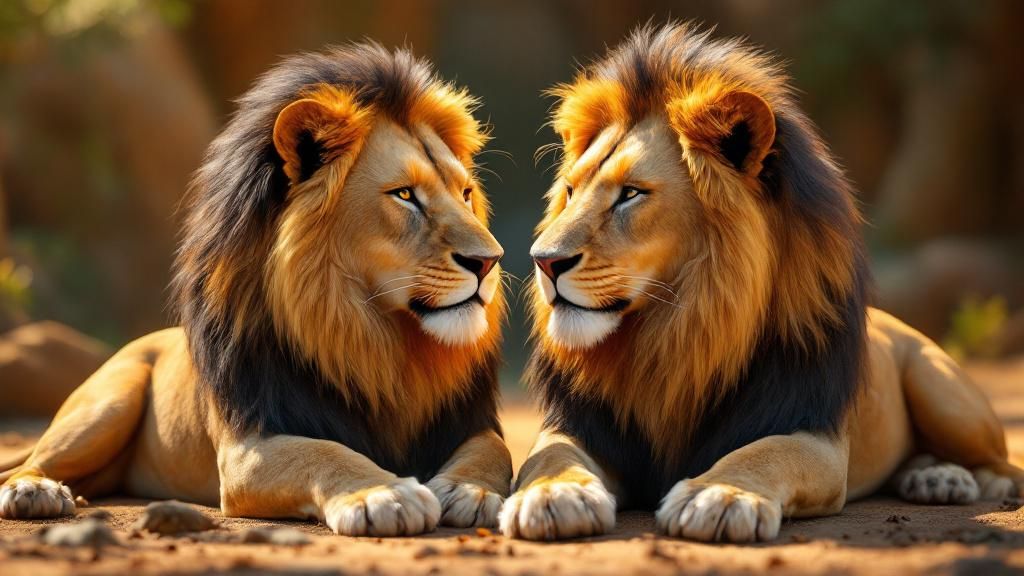
Belfast Zoo has reported the death of two of the world’s rarest lions after 22 years of companionship. Sisters Thheiba and Fidda, both Barbary lions, were euthanised on 6 March after a joint decision by the zoo’s veterinary staff. The subspecies, which once roamed the mountainous regions and desert areas of North Africa from Morocco to Egypt, is now extinct in the wild, with only an estimated 200 individuals living in captive environments. The two lionesses were part of the EAZA Ex-Situ Program, a conservation initiative created to protect the Barbary lion through carefully managed breeding programmes. Their death marks the death of two important figures to their subspecies’ survival, with both sisters having given birth to numerous young during their years at the Belfast facility.
A Lifelong Bond Concludes in Compassion
Thheiba’s deteriorating health in her later years prompted the tough call to euthanise both sisters together. The elder lioness had begun showing signs of considerable movement problems and steady loss of weight, signs that her quality of life was worsening. Belfast Zoo’s medical staff faced an agonising choice: let her endure pain, or make the compassionate decision to relieve her suffering. However, keeping them apart would have been similarly inhumane, as the sisters had remained together and maintained an inseparable connection common in their highly social species.
The zoo’s decision reflected a increasing awareness among conservation facilities that the psychological welfare of animals matters as much as their physical health. Lions are highly social creatures, and Fidda would have suffered immensely from losing her long-term mate. Zoo staff determined that euthanising both sisters simultaneously was the most humane option, allowing them to stay together even in death. “Both lionesses will be fondly remembered by the staff that looked after them and the thousands of visitors that adored them,” the zoo said in their formal statement.
- Thheiba experienced mobility issues and loss of weight in her later years
- Veterinarians recommended against parting the closely bonded pair
- Lions are remarkably gregarious creatures requiring companionship
- Both were put to sleep to prevent suffering from separation
The Barbary Lion: Once Roaming North African Wilderness, Now Extinct
The Barbary lion, formerly a majestic predator inhabiting the mountains and deserts of North Africa, exemplifies one of conservation’s most sobering failures. These remarkable creatures, distinguishable from their African cousins by their impressive size and notably lengthy, dark manes that extended to their bellies, inhabited territories stretching across Morocco to Egypt. Their powerful build and dominant bearing made them renowned across the region, yet by the 1960s, they had disappeared completely from the wild. Today, Thheiba and Fidda’s passing marks another chapter in the sorrowful tale of a subspecies that exists only because of human intervention and captive breeding programmes.
The Barbary lion’s disappearance from wild habitats was not caused by natural causes but from intentional human hunting. During the nineteenth century, as European settlements expanded across North Africa, Turkish and subsequent French authorities issued bounties for killed lions to safeguard growing settlements and farm animals. These monetary rewards created a coordinated elimination effort that demonstrated remarkable success. Hunters took advantage of the rewards, systematically destroying the lions until none remained in their natural environment. What had once been a thriving population across an entire continent was completely wiped out within a single century, a warning example of unchecked human expansion at nature’s expense.
Decline Throughout History and Contemporary Persistence
Today, approximately 200 Barbary lions exist exclusively in captivity, surviving solely through committed preservation work like the EAZA Ex-Situ Program. This global breeding programme represents humanity’s final opportunity to safeguard the subspecies from total extinction. Facilities worldwide, such as Belfast Zoo, take part in meticulously planned breeding programmes intended to preserve genetic variation and prevent inbreeding within the captive group. Without such programmes, the Barbary lion would have become merely a historical curiosity, recalled solely in old photographs and museum specimens instead of living, breathing animals.
Thheiba and Fidda demonstrated the vital significance of these protective measures. Throughout their 22 years at Belfast Zoo, both sisters made substantial contributions in the continuation of their subspecies by giving birth to numerous young. Their extended lifespan, far exceeding the normal lifespan of wild lions, showcased the protection and care offered by the zoo’s devoted personnel. Yet their story also reveals a bittersweet reality: whilst captive breeding keeps the Barbary lion from being lost forever, it cannot restore what was lost. These animals live in man-made settings rather than their original North African territories, a reflection of both protective accomplishments and human failure.
Preservation Through Breeding Programmes in Captivity
The EAZA Ex-Situ Program constitutes a worldwide partnership initiative to protect species teetering on the brink of extinction. By managing breeding programmes across zoos and wildlife facilities throughout Europe and other regions, the programme sustains genetic heterogeneity whilst mitigating the close breeding that could further weaken the Barbary lion population. Each participating institution contributes crucial data and support, establishing a coordinated approach that transcends geographical boundaries. Thheiba and Fidda’s involvement in this programme demonstrated their significance outside their role as zoo exhibits; they were conservation ambassadors for their genetic lineage, their progeny transmitting genetic material that might otherwise have disappeared permanently from the planet.
Belfast Zoo’s dedication to the EAZA programme demonstrates how modern zoos have shifted from basic animal collections into wildlife protection centres. The establishment offered Thheiba and Fidda with specialised veterinary care, suitable diet, and enriched environments that allowed them to live considerably longer than their counterparts in the wild would have. This longer life span permitted both sisters to generate numerous generations of offspring, boosting their role in species survival. The zoo’s decision to chronicle and distribute their journey with large numbers of annual guests also provided an educational purpose, boosting community awareness about species preservation concerns and the essential function managed breeding plays in preventing extinction.
- EAZA programme coordinates breeding across multiple European zoos and facilities
- Genetic diversity preserved through meticulous record-keeping and strategic pairings
- Captive populations serve as an insurance policy against species extinction
The Role of Worldwide Cooperation
International cooperation forms the cornerstone of successful wildlife conservation in the present day. The EAZA Ex-Situ Program illustrates how institutions across various regions can work in concert towards a shared objective, sharing expertise, hereditary records, and propagation advice. Belfast Zoo’s participation alongside institutions across Europe guaranteed that determinations regarding Thheiba and Fidda’s welfare and reproduction were informed by the collective knowledge of leading zoologists and conservation specialists. This collaborative approach has shown exceptionally productive, enabling the Barbary lion population to stabilise at approximately 200 individuals rather than vanishing completely. Without such international coordination and goodwill, the subspecies would have gone extinct decades ago.
Why Separation Was Not an Choice
The choice to euthanise both Thheiba and Fidda together, rather than allowing one sister to survive alone, reflects a profound understanding of lion behaviour and welfare. Lions are fundamentally social creatures that form strong attachments, particularly amongst siblings who have lived their entire lives together. For the Barbary lion sisters, who had shared every moment of their 22 years at Belfast Zoo, separation would have constituted a form of psychological torment. Veterinarians recognised that isolating one lion after the loss of her lifelong companion would cause profound suffering, transforming what should have been a compassionate end into prolonged suffering.
The zoo’s decision emphasised the emotional wellbeing of both creatures, acknowledging that quality of life includes psychological health as well as physical vitality. Thheiba’s declining mobility and weight loss signalled the beginning of the end, yet allowing her sister to observe that decline and thereafter experience loneliness and grief would have been equally cruel. By taking the hard decision to euthanise both together, Belfast Zoo demonstrated that genuine kindness sometimes means making heartbreaking decisions that respect the bonds animals create. This approach reflects contemporary understanding that animal welfare goes further than mere survival to encompass emotional fulfilment and dignity.
| Aspect | Significance |
|---|---|
| Lifelong companionship | Sisters shared 22 years together, creating inseparable emotional bonds |
| Social nature of lions | Lions are highly social animals requiring companionship for psychological wellbeing |
| Grief and isolation | Surviving alone would have caused prolonged psychological suffering and distress |
| Veterinary recommendation | Professional animal care specialists advised joint euthanasia as most humane option |
This strategy to the euthanasia of animals, though emotionally challenging for the zoo’s staff members and visitors, represents a compassionate evolution in how institutions place priority on the welfare of animals. Rather than regarding euthanasia solely as a medical necessity for an individual animal, Belfast Zoo recognised the mutual connection of Thheiba and Fidda’s lives and made a decision that respected their bond. The sisters’ lasting impact goes further than their genetic contribution to Barbary lion conservation; they also demonstrated to the world that true animal care involves respecting the deep connections these magnificent creatures form with one another.
Historical and Prospective Implications
Thheiba and Fidda’s remarkable 22-year lifespan constitutes a substantial achievement in captive breeding programmes. Their contributions to the EAZA Ex-Situ Program have left an lasting impact on Barbary lion protection, with their young serving to increase the extremely restricted population of approximately 200 animals held in captive facilities worldwide. The sisters’ genetic legacy guarantees that coming generations of this no longer found in nature subspecies will maintain their bloodline, maintaining genetic diversity vital for the long-term survival of the species.
Belfast Zoo’s compassionate approach to the sisters’ end of life has sparked broader conversations within the zoo sector about animal care standards and end-of-life management. The choice to put down both lionesses simultaneously, rather than separating them, encourages institutions to reconsider how they manage each animal’s requirements with the psychological and emotional elements of animal social bonds. This example may influence future protocols across zoos and wildlife facilities, fostering a more holistic understanding of animal dignity that surpasses mere physical survival to include psychological wellbeing and social connections.
- Young animals maintain genetic preservation of critically endangered Barbary lion subspecies worldwide
- Sisters’ contribution drives new animal welfare practices across global zoo collections
- Their story showcases conservation success despite species’ extinction in wild habitats
