
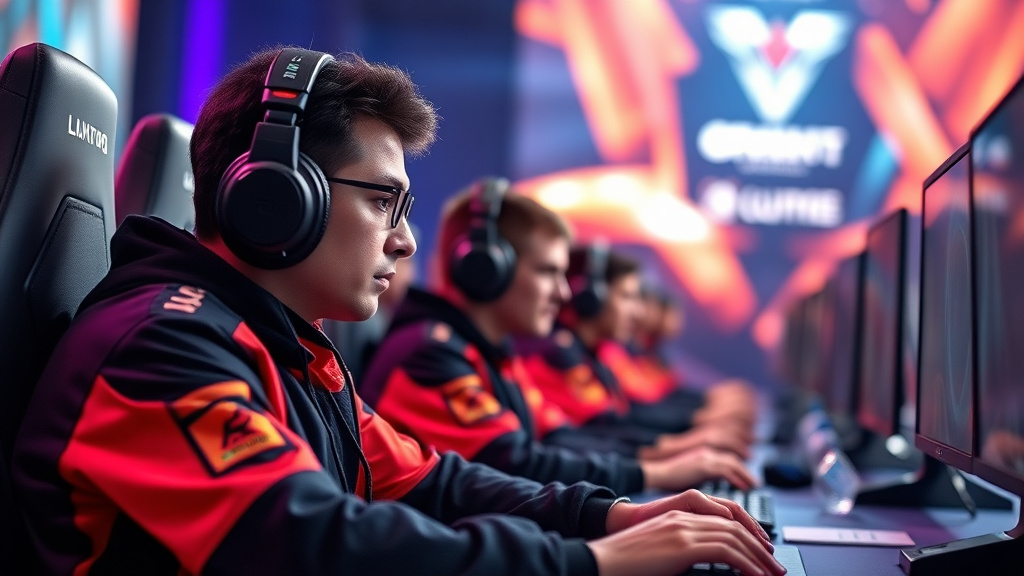
The esports industry has achieved an historic milestone as the latest Global Esports Championship shattered all prior viewership records, captivating millions of fans across continents. With streaming services overflowing and venues filled to capacity, this competition marks a pivotal moment for competitive gaming’s mainstream acceptance. This article examines the remarkable statistics behind this historic event, examines the factors driving explosive growth in esports viewership, and investigates what these record numbers signify for the future of digital media and competitive gaming worldwide.
Record-Breaking Audience Records
The Global Esports Championship has officially broken through the 500 million concurrent viewer barrier, marking a watershed moment for competitive gaming worldwide. This extraordinary achievement surpasses the previous record by an astounding 40%, demonstrating the rapid expansion of esports audiences across all major regions. The tournament’s cross-platform approach, spanning traditional streaming services, social media channels, and dedicated gaming platforms, enabled exceptional availability for fans globally.
Regional viewership data demonstrates compelling trends, with Asia-Pacific capturing 45% of total viewers, followed by Europe at 28% and North America at 22%. Peak concurrent viewership reached 125 million during the championship finals, a figure formerly deemed impossible in professional gaming. These landmark statistics emphasize esports’ transformation from niche entertainment into a mainstream cultural phenomenon, matching traditional sports broadcasting in both scale and audience engagement across different demographic groups.
Audience Expansion by Region and Interaction
The Global Esports Championship experienced remarkable audience expansion across all major regions, with Asia-Pacific leading the charge by capturing 45% of total viewership. Europe and North America delivered equally impressive growth trajectories, each supplying substantial viewer populations. Latin America and the Middle East proved to be unexpected growth markets, posting triple-digit percentage increases compared to previous championship editions. This geographical diversification reflects esports’ increasing mainstream acceptance and accessibility across different time zones and demographics worldwide.
Activity indicators demonstrated unprecedented fan involvement, with engaging elements producing exceptional social media interactions. Local fan groups arranged viewing parties, building localized hubs that enhanced the championship’s cultural impact. Brand partnerships from regional brands showed confidence in esports’ commercial viability and audience loyalty. The championship’s multilingual broadcast offerings and localized content approaches markedly boosted audience retention and enjoyment across varied regions, creating a solid base for continued international growth.
Video Streaming Services and Content Distribution Approach
The championship’s unprecedented viewership success can be attributed significantly to a extensive multi-platform delivery approach. Major streaming services including Twitch, YouTube Gaming, and Facebook Gaming simultaneously broadcast the tournament in multiple languages, guaranteeing global reach. This coordinated approach eliminated geographical barriers and enabled global audiences to experience live matches in live format. The platforms’ sophisticated technical systems handled millions of simultaneous users seamlessly, showcasing the advanced development of esports streaming capabilities and audience interaction features.
Key collaborations with mainstream media outlets significantly expanded the championship’s reach outside of traditional gaming audiences. Television networks in major markets delivered primetime coverage, while mobile streaming applications made possible on-the-go viewing for commuters and casual fans. This hybrid distribution model merged conventional broadcast with cutting-edge digital platforms, establishing various access points for different audience segments. The result was unmatched accessibility that transformed the championship into a genuinely worldwide phenomenon, transcending the boundaries of core gaming communities.
Future Trajectory for Esports Media
The unprecedented viewership of the Global Esports Championship indicates a pivotal era for esports broadcasting. Industry analysts predict rapid expansion in streaming investments, with major media conglomerates expanding their esports divisions. Traditional broadcasters are increasingly recognizing competitive gaming as a credible entertainment category, leading to high-quality production standards and expanded distribution networks. This momentum suggests esports broadcasting will keep developing into a mainstream entertainment phenomenon.
Looking ahead, technological advancements will transform the esports viewing experience. VR integration, interactive streaming features, and tailored content offerings are positioned to elevate fan engagement significantly. As sponsorship deals increase and advertising investments climb, esports broadcast infrastructure will become more complex. These trends indicate that esports content will reach parity with established sports industries within the next decade.
