
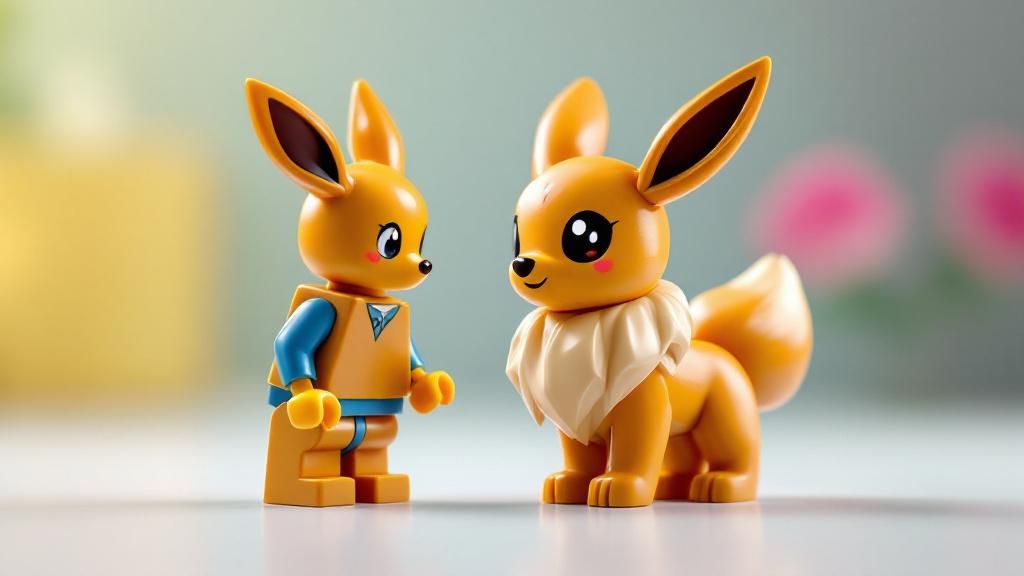
Lego fans and Pokémon enthusiasts could soon find reason to rejoice, as a leaked set has indicated that a minifigure-sized rendition of Eevee is heading to shelves this August. The adorable creature is reportedly set to feature in an elaborate Poké Ball diorama set, which is said to retail for around £195 (roughly $260) and contain 2,239 pieces. The finding comes just months after Lego officially launched its Pokémon building line in February, which already included a larger-scale Eevee model. If the information proves correct, this smaller pre-moulded variant would mark a notable growth of the range, providing enthusiasts a smaller option over the existing range.
The Data Breach: What Has Emerged
The unreleased images surfaced on the Lego rumours and news subreddit, where keen collectors identified what seems to be a pre-moulded Pokémon figure noticeably smaller than the full-size Eevee released earlier this year. The watermarked images indicate this minifigure-scale version represents a notable departure from Lego’s earlier strategy to the Pokémon line, possibly creating doors to a whole new range of collectible items. Whilst leaks should always be treated with a degree of scepticism, the detailed specificity—including the price point and piece count—lends considerable credibility to the rumour.
The rumoured set is set to launch in August 2024, making it among the earliest significant releases since the Pokémon Lego partnership began in February. This timing suggests Lego is keen to capitalise on the momentum generated by the initial collection, which proved popular amongst both building fans and dedicated fans. The substantial price tag and piece count indicate this will be a high-end product, presumably aimed at avid collectors rather than part-time collectors looking for a rapid franchise purchase.
- Leaked images reveal minifigure-scale Eevee pre-formed component
- Expected August next year launch date for the display set
- Rumoured retail price approximately £195 with 2,239 pieces
- Follows Lego’s early 2024 Pokémon line launch strong performance
A Significant Change in Pokémon Lego Design
The debut of minifigure-scale Pokémon constitutes a fundamental departure from Lego’s starting direction with the franchise. Since releasing in February, the Pokémon line has emphasised larger, more intricate builds that prioritise detail and presentation quality. However, this surfaced Eevee implies the Danish toy manufacturer is broadening its approach, recognising that enthusiasts might want smaller, more collectible variants in addition to their premium offerings. This change reflects successful strategies used in different licensed Lego ranges, where range of different scales and detail levels sustains sustained consumer interest.
The shift towards pre-cast minifigure-scale Pokémon could substantially transform how enthusiasts interact with the brand. Rather than only creating detailed scenes, collectors would have the opportunity to amass a variety of pocket-sized creatures, potentially leading to extensive private collections. This method furthermore opens up the hobby somewhat, as miniature figures typically command more affordable prices than their larger versions. If successful, this strategy could establish an entirely new product category within the Pokémon Lego ecosystem, encouraging repeat purchases and developing a collecting ethos comparable to classic Pokémon card collecting.
From Big Structures to Compact Figures
The original Eevee launched alongside the February release was a significant building undertaking, requiring considerable assembly hours and storage room. That large-scale model exemplified Lego’s traditional approach: complex, multi-piece assemblies intended to test builders and highlight architectural prowess. The disclosed smaller-scale version embodies the contrasting approach—simplicity, portability, and immediate gratification. This duality could attract varied buyer groups: dedicated enthusiasts pursuing intricate projects and casual collectors desiring quick acquisitions.
Lego’s latest introduction of authentic minifigures for Mario showcases the company’s faith in this scaled-down approach across branded franchises. The success of that undertaking likely emboldened designers to experiment with Pokémon minifigures, acknowledging the franchise’s enormous appeal to enthusiasts of all ages. Compact figures occupy minimal room, transport without difficulty, and blend smoothly into broader Lego displays. This flexibility makes them inherently more versatile than substantial construction sets, potentially attracting consumers who previously were shut out by the premium pricing of complex building projects.
The Poké Ball Diorama Collection Specifications
According to the details emerging online, the minifigure-scale Eevee will be bundled within a considerably ambitious Poké Ball-themed diorama set. This high-end product is projected to command a considerable price point of $260 USD, positioning it firmly within the premium tier of the Lego Pokémon range. The set’s considerable scale reflects Lego’s focus on developing immersive, display-worthy environments that showcase the franchise’s recognizable visual elements. Rather than being a separate piece, Eevee will act as a key element in a larger themed display, incentivising fans to acquire the complete experience rather than purchasing individual minifigures separately.
The diorama set’s ambitious scope becomes evident when examining its piece count: a considerable 2,239 individual components await assembly. This impressive figure places the set amongst Lego’s increasingly intricate creations, suggesting builders should prepare for considerable construction time and detailed craftsmanship throughout the model. The Poké Ball design naturally lends itself to imaginative display concepts, possibly including multiple levels, interactive elements, or thematic zones that honour the Pokémon universe. Such comprehensive sets appeal to passionate enthusiasts and enthusiasts willing to commit significant time and resources in intricate showcase models that serve as conversation starters and focal points within any collection.
| Specification | Details |
|---|---|
| Recommended Retail Price | $260 USD |
| Piece Count | 2,239 pieces |
| Featured Pokémon | Eevee (minifigure-scale) |
| Expected Launch Date | August 2024 |
The diorama’s high-end placement suggests Lego seeks to serve to dedicated enthusiasts rather than everyday buyers. With close to 2,240 components and a considerable outlay required, this set appeals to collectors with specialist display areas and real dedication for the Pokémon franchise. The August launch timeframe offers considerable scope for early purchases and excitement building, potentially establishing this diorama as a flagship product within the Pokémon Lego collection.
Extended Considerations for Authorised Lego Sets
The debut of minifigure-scale Pokémon constitutes a significant evolution in how Lego manages branded franchises. By incorporating compact pre-formed characters in combination with traditional brick-based construction, Lego demonstrates its commitment to innovation past conventional building methodologies. This blended method connects the divide between construction purists and individuals pursuing true-to-life character depiction, conceivably broadening the draw of franchised products across demographic boundaries. The strategy reflects proven approaches observed across alternative properties, pointing to a intentional movement in the direction of expanded product ranges that address different enthusiast interests and building philosophies.
The Pokémon Lego line’s evolution also signals broader market confidence in character-based ranges. Since launching in February with exclusively brick-constructed pieces, the franchise has quickly grown to include luxury display sets and character-dedicated models. This rapid growth indicates robust sales figures and consumer demand, encouraging Lego to expand investment in the partnership. The August launch timing positions this Eevee set as a key launch, potentially creating a blueprint for upcoming minifigure-sized Pokémon across future product lines and cementing the franchise’s business sustainability within Lego’s extensive licensed portfolio.
- Minifigure-scale figures offer improved character realism and display versatility
- Premium pricing supports investment in intricate diorama settings and immersive storytelling
- Hybrid building approaches cater to both conventional enthusiasts and leisure collectors
- Strong Pokémon range growth drives additional branded product creation
- Character-focused sets open new revenue streams outside of conventional building methods
Collector Feedback and Reviews
The leaked imagery has already generated significant excitement amongst the Lego and Pokémon collecting communities online. Enthusiasts have shown authentic excitement for the possibility of minifigure-sized Pokémon figures, regarding them as a logical development for the relatively nascent product line. Many collectors value the potential for greater display versatility and authentic representation that compact moulded figures provide compared to fully brick-constructed designs. The announcement has reignited debate about which Pokémon might undergo like consideration in future releases, with fans considering beloved characters like Pikachu, Charizard, and Gyarados as probable options for miniaturised versions.
However, not all responses have been consistently favourable, with some traditional Lego builders voicing concerns about pre-moulded components. Purist collectors argue that the addition of specialised figures potentially weakens the essential creative experience that defines Lego’s appeal. The substantial £195 price point—equivalent to approximately $260—has also prompted questions, with observers debating whether the diorama environment justifies the premium investment. Nevertheless, the prevailing view suggests that minifigure-scale Pokémon represent an exciting development, particularly for collectors seeking more authentic character representation and presentation choices within their collections.
