
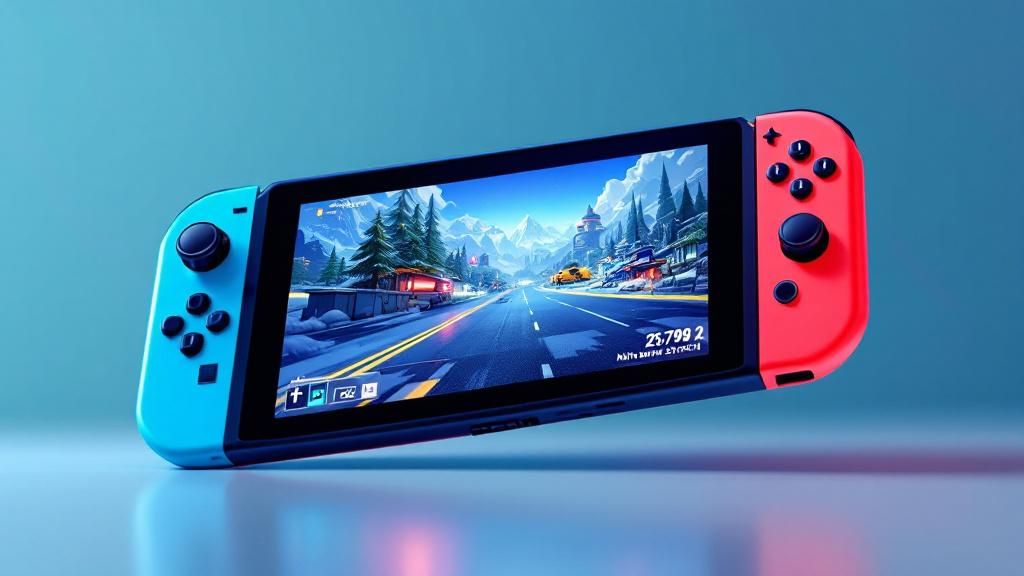
Nintendo has released a surprise firmware update for the Switch 2 that adds a clever new feature for backwards compatible games from the original console. The aptly named Handheld Boost Mode pushes all compatible Switch 1 titles to display at docked-mode resolution—up to 1080p—directly on the Switch 2’s handheld screen, rather than falling back on the original console’s maximum handheld resolution of 720p. The overnight update means players can now enjoy noticeably sharper visuals and crisper user interface text across their existing Switch library, with the Switch 2’s additional processing power providing enhanced graphics quality without requiring any changes to the games themselves.
Learning about Mobile Enhancement Mode
Handheld Boost Mode represents a simple yet powerful enhancement to the Switch 2’s backwards compatibility functionality. When turned on through the console’s settings panel, the feature instructs all compatible legacy games to output at the higher resolution usually designated for docked play. This means that instead of being limited to the original Switch’s 720p portable display, games now display at up to 1080p quality straight to the Switch 2’s screen. The result is right away obvious, with sharper text, sharper interface elements, and generally enhanced visual fidelity across the board. Titles like We Love Katamari highlight the gains particularly effectively, with interface text appearing significantly clearer when the mode is engaged.
However, prospective users should be aware of particular drawbacks before turning on the feature. Because the software essentially thinks it’s running in docked configuration, display notifications and input displays may not truly capture the mobile gaming feel. Touchscreen functionality can similarly be disrupted or compromised in some titles, meaning Handheld Boost Mode isn’t really a universal “activate and ignore” solution. Players will need to check suitability on a title-by-title basis and may need to adjust the feature on and off depending on personal needs. Nintendo Life is currently testing the vast Switch 1 collection to determine which games benefit most from the improvement, with titles like Xenoblade Chronicles 2 and 3 already flagged as top contenders for testing.
- Renders games at docking resolution on portable display
- Delivers up to 1080p instead of standard 720p screen
- Screen indicators may not reflect actual portable play
- Touchscreen functionality potentially impacted in some titles
Aesthetic Upgrades Throughout the Collection
The launch of Handheld Boost Mode has immediately revealed tangible graphical enhancements across Nintendo’s extensive legacy catalogue. Early analysis reveals that the upgraded resolution scaling produces distinctly crisper imagery when measured against conventional portable mode, with the Switch 2’s increased computational capability working behind the scenes to render games at TV-grade visual fidelity. The difference becomes particularly evident when examining games with complex graphical information or elaborate artistic compositions, where the increased pixel resolution translates to smoother edges and greater polish overall presentation on the handheld screen.
Community response has been highly favourable, with players already identifying their most-improved titles from their existing Switch 1 collections. Games spanning various categories—from action-adventure titles to RPGs and puzzle titles—show measurable improvements in visual clarity. The feature effectively taps into the latent graphical potential that was previously kept solely for docked play, making it feasible for players to experience their preferred Switch 1 games at their absolute best whilst maintaining full portability. This constitutes a substantial improvement to user experience for the millions of players with large established libraries.
Text and UI Clarity
One of the most immediately noticeable improvements under Handheld Boost Mode is the enhanced legibility of text and user interface elements. Menu screens, conversation windows, and on-screen text become visibly cleaner and more precise, particularly evident in titles like We Love Katamari where the improved display quality transforms previously rather indistinct typography into clear, well-defined characters. This refinement proves notably helpful for players who prefer extended handheld gaming sessions, as the enhanced sharpness minimises eye discomfort and makes navigation through menus considerably more enjoyable.
The visual refinement goes further than mere aesthetics, delivering substantial performance gains to gaming experience. HUD elements, health bars, and status indicators all render with enhanced clarity, enabling users to keep tabs on essential details in one look during intense gaming moments. For games using reduced font sizes or complicated menu structures, this upgrade can substantially enhance the overall user experience without demanding programming changes or title-specific updates.
Resolution Improvement Advantages
The jump from the original Switch’s 720p handheld maximum to the Switch 2’s 1080p capability creates a significant visual upgrade that extends far beyond basic arithmetic. The additional resolution allows creators’ initial creative visions to come across more clearly, with textures, character models, and environmental details rendering with enhanced precision than previously possible on a portable device. Games that were created for high-resolution docked output in mind finally display those assets at their intended quality whilst remaining fully portable, closing the divide between home and handheld gaming experiences.
This upgrade shows notably transformative for graphics-heavy titles that were initially created with high-end systems in mind. Games like Xenoblade Chronicles 2 and 3, renowned for their intricate environments and complex visual effects, are positioned to benefit considerably from the improved clarity. Players can now enjoy these large-scale role-playing games with markedly better visual fidelity without sacrificing the convenience of portable play, successfully offering a higher quality feel than what the original Switch could provide in handheld mode.
Standout Titles Deserving Another Look
The Handheld Boost Mode opens up compelling reasons to dust off beloved Switch titles that players may have shelved years ago. Early community feedback suggests certain games benefit dramatically from the enhanced resolution and docked-mode visuals, making them feel almost like entirely new experiences on the Switch 2’s screen. From expansive RPGs to visually intricate adventures, several standout titles demonstrate just how transformative this feature can be, offering players an excellent opportunity to rediscover their favourite games with substantially improved visual presentation|notably superior graphics|significantly better visuals.
| Game Title | Boost Mode Appeal |
|---|---|
| Xenoblade Chronicles 2 | Expansive worlds and detailed character models benefit significantly from 1080p clarity |
| We Love Katamari | Menu text and UI elements display noticeably sharper, improving overall readability |
| Metroid Dread | Environmental details and enemy sprites render with enhanced definition |
| Batman Arkham Trilogy | Graphically demanding assets showcase improved fidelity in portable mode |
| Monster Hunter Rise | Complex creature details and textures display with greater visual clarity |
| DOOM Eternal | Fast-paced action benefits from sharper HUD elements and improved visual feedback |
Nintendo Life is methodically developing a comprehensive guide highlighting the most significantly enhanced titles, with Xenoblade Chronicles 2 designated as an primary target for rigorous evaluation. The gaming community’s contributions demonstrate significant value in identifying hidden gems that excel notably with Boost Mode activated, ensuring players can carefully choose which accumulated games deserve immediate attention on their new console.
Key Factors and Constraints
Whilst Handheld Boost Mode represents a genuinely beneficial upgrade to the Switch 2’s backwards-compatible offering, it’s not entirely without compromise. The feature effectively convinces compatible Switch 1 games into assuming they’re running in docked mode, which can create unexpected side effects. Most notably, visual cues and UI components may not properly represent your actual handheld play style, potentially causing confusion for players expecting seamless integration between the display upgrades and the game’s user experience.
Touchscreen capability presents another significant consideration deserving of bearing in mind before turning on Boost Mode across your entire library. Since the software interprets handheld play as stationary output, games using touch controls may suffer limited functionality or unexpected behaviour. This suggests Handheld Boost Mode isn’t exactly the universal plug and play solution some players might hope for, requiring a more thoughtful strategy when determining which titles gain the most from the enhancement versus those best left in standard mode.
- On-screen prompts may fail to capture actual handheld gameplay despite visual improvements
- Touchscreen functionality could experience degradation in some legacy-compatible titles
- Manually adjusting settings suggested per game for superior experience and compatibility
Community Findings and Suggestions
Since Handheld Boost Mode went live, Nintendo Life continues to engage with the gaming community to pinpoint which Switch 1 titles stand out most with the enhancement enabled. Early polling reveals considerable enthusiasm for graphics-intensive games, with Xenoblade Chronicles: Definitive Edition topping community picks. Other standout contenders include Batman Arkham Trilogy, Monster Hunter Rise, and DOOM Eternal—all games that improve significantly from the sharper visuals and enhanced resolution now possible on the Switch 2’s portable display. These recommendations serve as a solid starting point for players eager to rediscover their existing libraries with fresh visual fidelity.
Nintendo Life is carefully compiling a detailed resource highlighting the most significantly enhanced titles, with Xenoblade Chronicles 2 established as an initial focus for thorough testing. The gaming community’s feedback reveal essential importance in identifying which unplayed games deserve immediate attention on the latest platform. Rather than enabling Boost Mode universally, players are advised to review developing community guidance and evaluate specific titles to ascertain which entries offer the most noticeable visual improvements versus those where touch controls or control oddities might diminish the experience.
